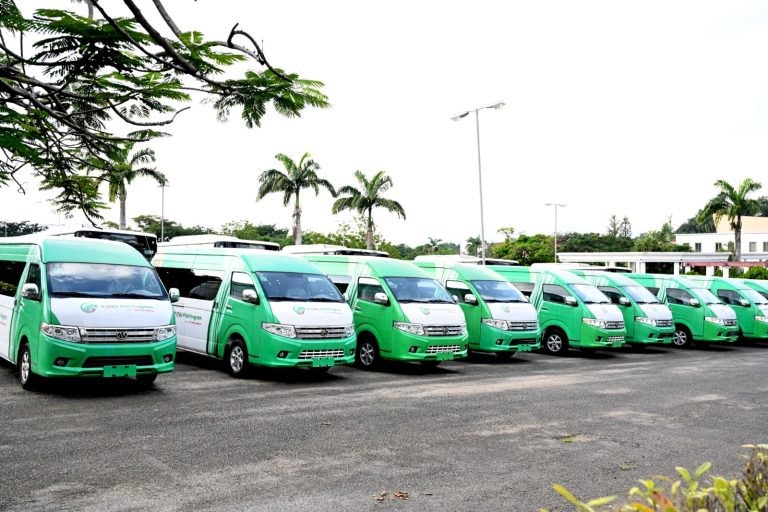
The Presidency has addressed public concerns over the safety of newly introduced Compressed Natural Gas (CNG) vehicles, promoted as an alternative to petrol-powered cars in the country
Bayo Onanuga, Special Adviser to President Bola Tinubu on Information and Strategy, responded to the apprehensions in a post on X on Thursday. His remarks followed recent reports that Malaysia intends to phase out CNG-powered vehicles by 2025.
Earlier reports from PUNCH Online highlighted Malaysia’s planned discontinuation of CNG vehicle sales by mid-2025. Malaysia’s Minister of Transport, Anthony Loke, cited safety concerns with older CNG tanks as a factor in this decision, explaining that some vehicles had been retrofitted with potentially hazardous liquefied petroleum gas (LPG) cylinders.
In response, Onanuga clarified that the Malaysian government’s concerns were primarily related to LPG, not CNG. Citing Loke’s original remarks, he pointed out that the Malaysian issue involved the dangers of LPG conversions, while Nigeria has opted to focus exclusively on CNG for its vehicles, avoiding LPG due to safety and cost concerns.
Onanuga also noted Malaysia’s limited success in promoting CNG adoption, achieving a conversion rate of only 0.2% over 15 years. In contrast, countries such as India, China, Iran, and Egypt have seen more substantial adoption rates.
He added that Malaysia faced challenges in replacing outdated CNG tanks due to restricted manufacturing capacity, whereas Nigeria has proactively addressed similar issues as it embarks on its CNG transition.
Malaysia introduced CNG vehicles in the late 1990s, specifically for taxis and airport limousines, while Nigeria began its own CNG initiative in 2024 to provide a safer and more sustainable fuel option for transportation.
Follow Us on Facebook – @LadunLiadi; Instagram – @LadunLiadi; Twitter – @LadunLiadi; Youtube – @LadunLiadiTV for updates