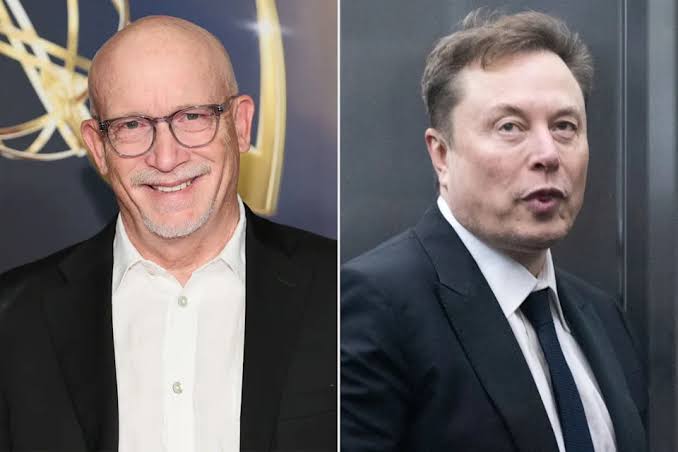
The Venice Film Festival has hosted the premiere of major documentary-maker Alex Gibney’s epic and provocative new profile of the richest man on Earth, which has been years in the making
Here are five key takeaways from the film.
Alex Gibney, the Oscar-winning director of Taxi to the Dark Side and Enron: The Smartest Guys in the Room, has made documentaries about some of the richest and most powerful people on Earth. But none of them has been as rich and powerful as Elon Musk. Maybe that’s why Gibney’s profile of the tech entrepreneur and SpaceX boss is such an epic.

Musk, which premiered at the Venice Film Festival on Tuesday, has a running time of 225 minutes, and will be released with a 10-minute intermission – so that’s almost four hours on the life and work of the world’s richest man.
There is little in the film that isn’t already on record, but Gibney gathers all the extant reporting into one breathlessly fast-moving, largely negative, and terrifyingly apocalyptic profile.
Here are five things you should know about the documentary – just in case you don’t have four hours to spare.
1. Musk himself isn’t interviewed – but appears as an AI avatar
Gibney initially tried for an interview with Musk, but when the project was announced back in March 2023, Musk declared on social media that it would be a “hit piece”, to which Gibney responded, “How would you know?” The director’s solution is to have an AI-generated avatar of Musk repeat things that he has said in public. This is apt, says Gibney in his voiceover, because Musk believes that we might all be living in a simulation – a video game being played by our descendants in the future.
2. David Byrne helped write a theme song
David Byrne has co-written Let Me Sell You a Dream for the film’s closing credits, which has lyrics consisting entirely of phrases spoken by Musk in the past. The title is appropriate, according to some of Gibney’s interviewees, who say that Musk tends to attract investment by promising that imagined future accomplishments – such as cities on Mars and completely safe self-driving cars – are imminent or already realised. “That’s not happening,” says Adam Becker, an author and astrophysicist, about Musk’s scheme to colonise Mars. “The gravity is too low, the radiation is too high, there’s no air, and the dirt is filled with poison.” Musk has consistently defended his visionary philosophy however: “I’m very good at predicting the future,” he told The Economist in a July interview. “I’m not perfect but I’m very good… people don’t realise that what I’m saying will come to pass – maybe not exactly in the timing that I thought, but it will come to pass.”
3. Musk’s time in the White House is scrutinised
The film suggests that Musk dealt with the US government the way he dealt with Twitter. Zoë Schiffer, the author of Extremely Hardcore: Inside Elon Musk’s Twitter, says that after Musk bought the social media platform, what she refers to as his “goons” pushed out the majority of the staff without pausing to learn what they actually did. Later, as the head of President Trump’s Department of Government Efficiency, or Doge, Musk followed “the Twitter playbook”, Schiffer says, describing how he tried and failed to wipe out the US national debt by slashing the budget of numerous departments, this time with the help of a group of assistants in their early twenties who had no government experience.
4. An old British film makes a surprise appearance
Gibney uses clips from a British fantasy film, The Man Who Could Work Miracles (1937), to illustrate his very dramatic view of Musk. In this black-and-white classic, based on an HG Wells story, a celestial being bestows an ordinary man (Roland Young) with infinite powers. The man eventually demands that the world’s leaders change society instantly, but he ends up accidentally destroying the planet.
5. The film has had a strong reception so far
Reviews from the Venice premiere have so far been largely positive. Variety called it “a lacerating and important watch, grounded in Gibney’s supremely insightful but user-friendly mastery of the documentary form”, while in a four-star review, The Telegraph dubbed it “a chillingly forensic hatchet job”. Unsurprisingly, Musk himself has not been one of its admirers: on X on Wednesday, among other comments, he described the film as “a hit piece that misses, and makes the fatal sin of being boring for 4 hours”.
BBC
Follow Us on Facebook – @LadunLiadi; Instagram – @LadunLiadi; Twitter – @LadunLiadi; Youtube – @LadunLiadiTV for updates