It’s a long read, but the headline says it all.
Bose Tetede was worn out by the
time she arrived home that evening. A hectic four-hour trek to and fro her home
in Imule, a small agrarian community with over 3000 residents in Ipokia Local
Government Area of Ogun State, and Itaope, a border town in neighbouring
Republic of Benin, had taken its toll on her. The sound of her heavy breathing
summarises the agonising experience.
time she arrived home that evening. A hectic four-hour trek to and fro her home
in Imule, a small agrarian community with over 3000 residents in Ipokia Local
Government Area of Ogun State, and Itaope, a border town in neighbouring
Republic of Benin, had taken its toll on her. The sound of her heavy breathing
summarises the agonising experience.
Tetede had left home at about
7:00am last Monday in search of help for her sick twins – Taiwo, a boy and
Kehinde, a girl. The toddlers had been struck by malaria and so needed urgent
attention to get back to their old, playful selves. With one child strapped to
her back and another carried over her shoulder, the young mother pounded the
bumpy, dusty countryside roads for more than two hours before finally arriving
in the Beninese town where her children were attended to promptly and given
drugs at the cost of N4000. But enduring another two-hour trek back to Imule
under the torrid sun with the weight of the ailing twins resting on her frail
frame was more than Tetede could bear. On the evening our correspondent came
across her, she could barely move her body.
7:00am last Monday in search of help for her sick twins – Taiwo, a boy and
Kehinde, a girl. The toddlers had been struck by malaria and so needed urgent
attention to get back to their old, playful selves. With one child strapped to
her back and another carried over her shoulder, the young mother pounded the
bumpy, dusty countryside roads for more than two hours before finally arriving
in the Beninese town where her children were attended to promptly and given
drugs at the cost of N4000. But enduring another two-hour trek back to Imule
under the torrid sun with the weight of the ailing twins resting on her frail
frame was more than Tetede could bear. On the evening our correspondent came
across her, she could barely move her body.
“I feel like a trailer just ran
over me,” she managed to utter before using her left hand to gently wipe off a
stream of sweat that had gathered on her face. “I set out for Itaope in Benin
around 7:00am with my children after we could not get proper attention at
Iropo. I trekked for more than two hours carrying the children before arriving
Itaope. After they were treated, I managed to rest for one hour before bringing
them back home through another two-hour walk under the sun. The pain I feel all
over my body is indescribable but I had to do this to save the lives of my
children,” she said before sinking her entire body weight into a wooden bench.
over me,” she managed to utter before using her left hand to gently wipe off a
stream of sweat that had gathered on her face. “I set out for Itaope in Benin
around 7:00am with my children after we could not get proper attention at
Iropo. I trekked for more than two hours carrying the children before arriving
Itaope. After they were treated, I managed to rest for one hour before bringing
them back home through another two-hour walk under the sun. The pain I feel all
over my body is indescribable but I had to do this to save the lives of my
children,” she said before sinking her entire body weight into a wooden bench.
Like Tetede, many residents of
Imule, Madoga, Ilagbe, Kajoola, Osooro and several nearby settlements all under
Ipokia Local Government Area, a community bordering Benin Republic and with a
population of 150, 000 people according to the 2006 census, have learnt to
endure such energy-sapping walks to save their lives and that of their loved
ones in periods of emergencies. Since the health centre in Iropo, which serves
over five towns with a combined population of over 10, 000 people, crumbled,
residents have been forced to look for viable alternatives elsewhere – the
search of which has come at a heavy price at times.
Imule, Madoga, Ilagbe, Kajoola, Osooro and several nearby settlements all under
Ipokia Local Government Area, a community bordering Benin Republic and with a
population of 150, 000 people according to the 2006 census, have learnt to
endure such energy-sapping walks to save their lives and that of their loved
ones in periods of emergencies. Since the health centre in Iropo, which serves
over five towns with a combined population of over 10, 000 people, crumbled,
residents have been forced to look for viable alternatives elsewhere – the
search of which has come at a heavy price at times.
“Several of our women on the verge
of delivery have died while being rushed to hospital in Benin Republic and
Ifonyintedo,” Adeyemi Tetede, a local chief and head of Imule community, told
Saturday PUNCH. “In fact these days, many of the women are now delivered of
their babies at home through the help of traditional birth attendants. If you
try to take any of them to Iropo where we have the only functional hospital
around this entire axis, you will hardly get the needed attention because of
the number of people who visit and the shortage of staff and facilities there.
It is a very big problem we are facing here,” he said.
of delivery have died while being rushed to hospital in Benin Republic and
Ifonyintedo,” Adeyemi Tetede, a local chief and head of Imule community, told
Saturday PUNCH. “In fact these days, many of the women are now delivered of
their babies at home through the help of traditional birth attendants. If you
try to take any of them to Iropo where we have the only functional hospital
around this entire axis, you will hardly get the needed attention because of
the number of people who visit and the shortage of staff and facilities there.
It is a very big problem we are facing here,” he said.
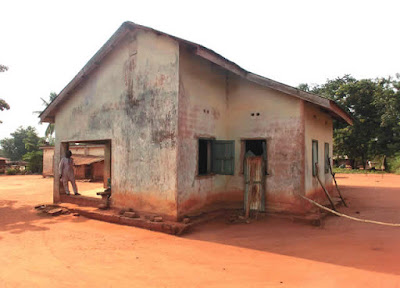
Established over 30 years ago, the
Ipokia Local Government Health Clinic, Iropo, today betrays any semblance of a
life-saving medical facility. Manned by only two members of staff – a young
nurse and a middle-aged doctor, the hospital apart from lacking basic items
required to deliver quality healthcare to the hundreds of low-income-earning
residents who throng it every month for solution, does not have enough drugs to
treat minor cases like malaria and typhoid – the two most prevalent ailments in
the area. To make matters worse, the hospital boasts of only one bed to treat a
population size of over 10, 000 people – young and old – who rely on it for
their medical needs. The facility does not have a toilet and bathroom, forcing
patients who visit to defecate in polythene bags and bathe in the open, under a
tree behind the hospital. Newly nursing mothers who wish to be cleaned by the hospital
staff must have a relation to go in search of water as the facility does not
have a functional tap. The only well providing water for the hospital has since
run dry and has been converted to a dump where feaces of patients who defecate
in polythene bags are littered. On occasions where there are so many newly
delivered mothers around, each is allowed to rest on the hospital’s only bed
for a few minutes before giving way to another woman and her baby. At times,
when the entire place is ‘jam-packed’, the women are sent back home to take
care of themselves almost immediately after they had been delivered of their
babies. For patients who visit this hospital and the two staff on ground to
attend to their needs, it is a helpless situation – one whose elastic can
stretch no further.
Ipokia Local Government Health Clinic, Iropo, today betrays any semblance of a
life-saving medical facility. Manned by only two members of staff – a young
nurse and a middle-aged doctor, the hospital apart from lacking basic items
required to deliver quality healthcare to the hundreds of low-income-earning
residents who throng it every month for solution, does not have enough drugs to
treat minor cases like malaria and typhoid – the two most prevalent ailments in
the area. To make matters worse, the hospital boasts of only one bed to treat a
population size of over 10, 000 people – young and old – who rely on it for
their medical needs. The facility does not have a toilet and bathroom, forcing
patients who visit to defecate in polythene bags and bathe in the open, under a
tree behind the hospital. Newly nursing mothers who wish to be cleaned by the hospital
staff must have a relation to go in search of water as the facility does not
have a functional tap. The only well providing water for the hospital has since
run dry and has been converted to a dump where feaces of patients who defecate
in polythene bags are littered. On occasions where there are so many newly
delivered mothers around, each is allowed to rest on the hospital’s only bed
for a few minutes before giving way to another woman and her baby. At times,
when the entire place is ‘jam-packed’, the women are sent back home to take
care of themselves almost immediately after they had been delivered of their
babies. For patients who visit this hospital and the two staff on ground to
attend to their needs, it is a helpless situation – one whose elastic can
stretch no further.
“Attending to the hundreds of
patients who visit this place from over five communities and several
settlements in this local government has been very stressful,” the nurse at the
hospital, Hannah Oke, confessed. “Sometimes when there are so many cases for us
to handle especially women on the verge of delivery, we advise them to go to
other hospitals outside the locality. In fact, as a result of this situation,
many women now give birth at home.
patients who visit this place from over five communities and several
settlements in this local government has been very stressful,” the nurse at the
hospital, Hannah Oke, confessed. “Sometimes when there are so many cases for us
to handle especially women on the verge of delivery, we advise them to go to
other hospitals outside the locality. In fact, as a result of this situation,
many women now give birth at home.

The only bed in the hospital
“Apart from shortage of staff and
lack of basic infrastructure like toilet, bathroom and water, electricity is
also another major problem we face here. If a woman is to be delivered of a
baby in the night, we rely only on torch to attend to her as the hospital does
not have a generator of its own.
lack of basic infrastructure like toilet, bathroom and water, electricity is
also another major problem we face here. If a woman is to be delivered of a
baby in the night, we rely only on torch to attend to her as the hospital does
not have a generator of its own.
“We are pleading with government
to quickly intervene in our situation so that we can provide the people of this
area with good health care and save many lives in the process,” she said.
to quickly intervene in our situation so that we can provide the people of this
area with good health care and save many lives in the process,” she said.
The unavailability of electricity
supply has made communication with the outside world for many of the
communities in this region very difficult. Mobile phones are gathered once in
two days to be charged at N100 each in Ifonyintedo, about 15 kilometers away.
Even at that, mobile communications network in the area is erratic and largely
unstable. In extreme cases, residents rely on visitors to bring them news of
happenings in the locality and country.
supply has made communication with the outside world for many of the
communities in this region very difficult. Mobile phones are gathered once in
two days to be charged at N100 each in Ifonyintedo, about 15 kilometers away.
Even at that, mobile communications network in the area is erratic and largely
unstable. In extreme cases, residents rely on visitors to bring them news of
happenings in the locality and country.
“It is quite tough charging our
phone batteries in this environment as there is no electricity supply. So most
times we gather our phones and give to one of us who go to charge them for us
at Ifonyintedo. Sometimes the person can get there and not find space to charge
because everywhere had been occupied, he or she returns the phones to the
owners like that, cutting us off from communicating for several days. Even when
our phones are fully charged, receiving network signal to make a call could be
almost impossible. That is how bad our situation is here,” said Abike Odeyemi,
a mother of three.
phone batteries in this environment as there is no electricity supply. So most
times we gather our phones and give to one of us who go to charge them for us
at Ifonyintedo. Sometimes the person can get there and not find space to charge
because everywhere had been occupied, he or she returns the phones to the
owners like that, cutting us off from communicating for several days. Even when
our phones are fully charged, receiving network signal to make a call could be
almost impossible. That is how bad our situation is here,” said Abike Odeyemi,
a mother of three.
Chilling as it sounds, the
terrible state of the Ipokia Local Government Health Clinic in Iropo, Ogun
State, and the non availability of electricity supply and its attendant
effects, is only a fraction of the horror residents of the locality are made to
contend with on daily basis. For example, primary schools in each of the over
five towns and dozens of smaller settlements across the area, do not have more
than two teachers to tutor pupils of around 200 to 400 in some of the places
visited by our correspondent recently. In Ilagbe, only two teachers oversee the
education of the 400 boys and girls who attend the community’s primary school.
The town, after series of attempts to have government post more hands to help
shapen their children’s’ future, hired a third teacher who they pay N10, 000
every month. According to Gabriel Onipede, a respected traditional chief, the
move, though to boost the education of their wards, is an added burden on their
lean pockets.
terrible state of the Ipokia Local Government Health Clinic in Iropo, Ogun
State, and the non availability of electricity supply and its attendant
effects, is only a fraction of the horror residents of the locality are made to
contend with on daily basis. For example, primary schools in each of the over
five towns and dozens of smaller settlements across the area, do not have more
than two teachers to tutor pupils of around 200 to 400 in some of the places
visited by our correspondent recently. In Ilagbe, only two teachers oversee the
education of the 400 boys and girls who attend the community’s primary school.
The town, after series of attempts to have government post more hands to help
shapen their children’s’ future, hired a third teacher who they pay N10, 000
every month. According to Gabriel Onipede, a respected traditional chief, the
move, though to boost the education of their wards, is an added burden on their
lean pockets.
“Our community primary school is
in a terrible state. We have only two teachers teaching about 400 pupils. How
can any child learn something meaningful under such atmosphere? So, as a
community we had to organise one extra teacher whom we pay N10, 000 every month
to support the education of our children.
in a terrible state. We have only two teachers teaching about 400 pupils. How
can any child learn something meaningful under such atmosphere? So, as a
community we had to organise one extra teacher whom we pay N10, 000 every month
to support the education of our children.
“However, contributing the money
to pay the teacher every month has not been easy considering the fact that many
households are just managing to get by especially now that the bad state of our
roads is greatly affecting the price of our farm produce. The bad state of the
roads in the town is not making the transportation of our harvest to the market
possible, so those who manage to come and buy from us do so at a very lower
price. It is a very big problem for us,” he said.
to pay the teacher every month has not been easy considering the fact that many
households are just managing to get by especially now that the bad state of our
roads is greatly affecting the price of our farm produce. The bad state of the
roads in the town is not making the transportation of our harvest to the market
possible, so those who manage to come and buy from us do so at a very lower
price. It is a very big problem for us,” he said.
While all of these towns have at least
one primary school where their children are being taught, albeit by fewer
teachers than required, majority of the villages under Ipokia Local Government
Area do not have a secondary school, forcing students from all these
communities to trek several kilometers everyday to attend the only one at
Ifonyintedo. As a result of the distance, many pupils have dropped out of the
secondary school – contributing to the high illiteracy of the area – while
those still willing to finish the ‘race’, have been forced to rent apartments
in Ifonyintedo, going home to meet their families only at weekends.
one primary school where their children are being taught, albeit by fewer
teachers than required, majority of the villages under Ipokia Local Government
Area do not have a secondary school, forcing students from all these
communities to trek several kilometers everyday to attend the only one at
Ifonyintedo. As a result of the distance, many pupils have dropped out of the
secondary school – contributing to the high illiteracy of the area – while
those still willing to finish the ‘race’, have been forced to rent apartments
in Ifonyintedo, going home to meet their families only at weekends.
“Our children trek over 15
kilometers every day just to attend secondary school at Ifonyintedo,” Ezekiel
Bawola, an old farmer in Iropo told Saturday PUNCH. “As a result of this
problem, some parents were forced to rent apartments for their children there
so they could live and attend the school during the week and return home on
Fridays for weekend. Some children whose parents cannot afford to rent an
apartment and who cannot also cope with the daily trekking, have dropped out
and taken to farming. We fear for the future of our children like this but as a
community, there isn’t much we can do to change this except government or
members of the public intervene in our situation,” he said.
kilometers every day just to attend secondary school at Ifonyintedo,” Ezekiel
Bawola, an old farmer in Iropo told Saturday PUNCH. “As a result of this
problem, some parents were forced to rent apartments for their children there
so they could live and attend the school during the week and return home on
Fridays for weekend. Some children whose parents cannot afford to rent an
apartment and who cannot also cope with the daily trekking, have dropped out
and taken to farming. We fear for the future of our children like this but as a
community, there isn’t much we can do to change this except government or
members of the public intervene in our situation,” he said.
As a result of the heavy
responsibilities it shoulders, the local government’s only secondary school,
Imotu Community Commercial Academy, Ifonyintedo, now bears signs of weariness.
The ceiling in most of the classrooms in the school have either been completely
destroyed or at the verge of totally caving in. Doors, windows, desks and even
blackboards – all were in terrible states when our correspondent visited the
institution earlier in the week. It is under such unpalatable environment that
Ipokia’s army of young boys and girls are taught and groomed for a future that
looks threatened even before it had taken off.
responsibilities it shoulders, the local government’s only secondary school,
Imotu Community Commercial Academy, Ifonyintedo, now bears signs of weariness.
The ceiling in most of the classrooms in the school have either been completely
destroyed or at the verge of totally caving in. Doors, windows, desks and even
blackboards – all were in terrible states when our correspondent visited the
institution earlier in the week. It is under such unpalatable environment that
Ipokia’s army of young boys and girls are taught and groomed for a future that
looks threatened even before it had taken off.
“The poor quality of life in the
locality and bad state of the only secondary school we have here tells you a
lot about the high poverty rate across the region,” David Abraham, a pastor and
missionary of the Baptist Mission in Nigeria, told Saturday PUNCH. “If you move
all around the local government area and go to some of these interior
communities, you’ll be shocked at what will confront you. The people are
sleeping and waking up in abject poverty.
locality and bad state of the only secondary school we have here tells you a
lot about the high poverty rate across the region,” David Abraham, a pastor and
missionary of the Baptist Mission in Nigeria, told Saturday PUNCH. “If you move
all around the local government area and go to some of these interior
communities, you’ll be shocked at what will confront you. The people are
sleeping and waking up in abject poverty.

“If not for the occasional medical
outreach programmes that we used to organise in some of these communities where
we conduct checks and offer free treatment to people, the death rate could have
been higher than what it is today across the area. But even with our effort,
the demand for quality medical care and improved living condition is still very
high. Something urgent should be done to save lives and protect the future of
children in this area,” he said.
outreach programmes that we used to organise in some of these communities where
we conduct checks and offer free treatment to people, the death rate could have
been higher than what it is today across the area. But even with our effort,
the demand for quality medical care and improved living condition is still very
high. Something urgent should be done to save lives and protect the future of
children in this area,” he said.
In the last few months,
missionaries of the Nigerian Baptist Convention have given free medical
services to residents of these communities. Also, students of Bowen University,
Iwo, Osun State, a Baptist institution, have helped organise free education for
both adults and children across most parts of Ipokia. But even with such
priceless interventions, the demand in healthcare and education remains
extremely high.
missionaries of the Nigerian Baptist Convention have given free medical
services to residents of these communities. Also, students of Bowen University,
Iwo, Osun State, a Baptist institution, have helped organise free education for
both adults and children across most parts of Ipokia. But even with such
priceless interventions, the demand in healthcare and education remains
extremely high.
Local Government officials at
Ipokia told Saturday PUNCH that they were aware of the situation in these
communities and were making efforts at addressing the plight of the people. An
official, who asked not to be named, said that necessary interventions to
improve the lives of the residents would soon be made by the administration.
Ipokia told Saturday PUNCH that they were aware of the situation in these
communities and were making efforts at addressing the plight of the people. An
official, who asked not to be named, said that necessary interventions to
improve the lives of the residents would soon be made by the administration.
“We are aware of the situation in
some of the places you have mentioned and I can assure you that intervention
projects would soon commence in those places to ease the sufferings of the
people. We are a responsible government committed to serving the interest of
our people. Things shall soon improve there,” the official said.
some of the places you have mentioned and I can assure you that intervention
projects would soon commence in those places to ease the sufferings of the
people. We are a responsible government committed to serving the interest of
our people. Things shall soon improve there,” the official said.
According to a sociologist, Grace
Warikoru, the neglect of rural communities by governments across the country
has contributed significantly to a host of problems including illiteracy, high
infant and maternal mortality, poverty and crime.
Warikoru, the neglect of rural communities by governments across the country
has contributed significantly to a host of problems including illiteracy, high
infant and maternal mortality, poverty and crime.
The university lecturer says
except concrete efforts are made to address the plight of rural communities,
the attendant effects like crime and disorderliness can spill to urban areas in
the not too distant future.
except concrete efforts are made to address the plight of rural communities,
the attendant effects like crime and disorderliness can spill to urban areas in
the not too distant future.
“If you look at majority of the
crimes committed in big urban cities like Lagos, you’ll realise the culprits
are mostly these guys who came from the rural areas not too long ago in an
attempt to escape the biting poverty in those places.
crimes committed in big urban cities like Lagos, you’ll realise the culprits
are mostly these guys who came from the rural areas not too long ago in an
attempt to escape the biting poverty in those places.
“The truth is that any government
that fails to develop the rural communities does so at its own detriment
because by the time the repercussions would come, it would spill to the cities
themselves.
that fails to develop the rural communities does so at its own detriment
because by the time the repercussions would come, it would spill to the cities
themselves.
“The insurgency we see in parts of
the country today is as a result of the neglect of the rural communities by
government. The moment poverty and deprivation in the basic areas of life like
clean water, food, quality health care and education get hold of a people; the
consequences could prove too costly for not just that locality but the society
at large.
the country today is as a result of the neglect of the rural communities by
government. The moment poverty and deprivation in the basic areas of life like
clean water, food, quality health care and education get hold of a people; the
consequences could prove too costly for not just that locality but the society
at large.
“So my advice is for government to
begin to pay more attention to the needs of rural communities. The people are
not asking for too much; just an improvement in the quality of life,” she said.
begin to pay more attention to the needs of rural communities. The people are
not asking for too much; just an improvement in the quality of life,” she said.
A psychologist, Buchi Anyamele,
explains that trekking several hours to and fro an institution of learning
could have negative consequences for the health, mind frame and assimilation
ability of a person.
explains that trekking several hours to and fro an institution of learning
could have negative consequences for the health, mind frame and assimilation
ability of a person.
According to him, secondary school
pupils who endure long walks in places like Ipokia may not be psychologically
stable to understand and put into good use all they are taught in the
classroom.
pupils who endure long walks in places like Ipokia may not be psychologically
stable to understand and put into good use all they are taught in the
classroom.
“Engaging in such stressful daily
treks is not good for the health and mental stability of anybody. If there are
students who trek three hours to school every day and the number of hours while
going back home, I pity them because I fear they might not be learning anything
tangible after all.
treks is not good for the health and mental stability of anybody. If there are
students who trek three hours to school every day and the number of hours while
going back home, I pity them because I fear they might not be learning anything
tangible after all.
“The human brain especially for
young boys and girls needs to be properly relaxed for assimilation to occur.
There is no way you can pass through such stress and still learn properly or
even understand what you are taught by the teacher. Such situation is not only
dangerous for the health but also for the psychology of the individuals as it
could lead to a loss of confidence and self esteem,” he said.
young boys and girls needs to be properly relaxed for assimilation to occur.
There is no way you can pass through such stress and still learn properly or
even understand what you are taught by the teacher. Such situation is not only
dangerous for the health but also for the psychology of the individuals as it
could lead to a loss of confidence and self esteem,” he said.
While shortage of schools and
teachers coupled with the bad state of roads across most parts of the local
government appear to have aggravated the people’s worries in this Ogun
community, it is the lack of a functional and well equipped hospital in the
region that has proven the biggest albatross. Towns like Madoga and Kajola used
to have fairly operational health centers until lack of proper funding led to
their complete closure recently. The Ipokia Local Government Health Clinic,
Iropo, which for a while had turned out an able cover, is now also approaching
the final stages of its hibernation. With only one bed left standing inside its
dusty and dilapidated ward and its drugs shelf waning thin by the day, it might
not be too long before its fragile doors are completely shut from the dozens
who turn to it every day for solution.
teachers coupled with the bad state of roads across most parts of the local
government appear to have aggravated the people’s worries in this Ogun
community, it is the lack of a functional and well equipped hospital in the
region that has proven the biggest albatross. Towns like Madoga and Kajola used
to have fairly operational health centers until lack of proper funding led to
their complete closure recently. The Ipokia Local Government Health Clinic,
Iropo, which for a while had turned out an able cover, is now also approaching
the final stages of its hibernation. With only one bed left standing inside its
dusty and dilapidated ward and its drugs shelf waning thin by the day, it might
not be too long before its fragile doors are completely shut from the dozens
who turn to it every day for solution.
A medical doctor, Jide Arogundade,
told Saturday Punch that the area could witness a rise in deaths resulting from
communicable diseases like typhoid, cholera, malaria and rheumatism if access
to quality health care does not improve in the very near future.
told Saturday Punch that the area could witness a rise in deaths resulting from
communicable diseases like typhoid, cholera, malaria and rheumatism if access
to quality health care does not improve in the very near future.
According to him, having two
members of staff oversee the medical needs of a population of over 10, 000
people is not only dangerous but grossly inappropriate. To imagine that only
one bed is also available to that number is alarming, he said. But bizarre as
it is, this is the sad reality in the larger part of Ipokia Local Government
Area, a remote region tucked in the extremes of Ogun State.
members of staff oversee the medical needs of a population of over 10, 000
people is not only dangerous but grossly inappropriate. To imagine that only
one bed is also available to that number is alarming, he said. But bizarre as
it is, this is the sad reality in the larger part of Ipokia Local Government
Area, a remote region tucked in the extremes of Ogun State.
Source: Punch
Follow Us on Facebook – @LadunLiadi; Instagram – @LadunLiadi; Twitter – @LadunLiadi; Youtube – @LadunLiadiTV for updates