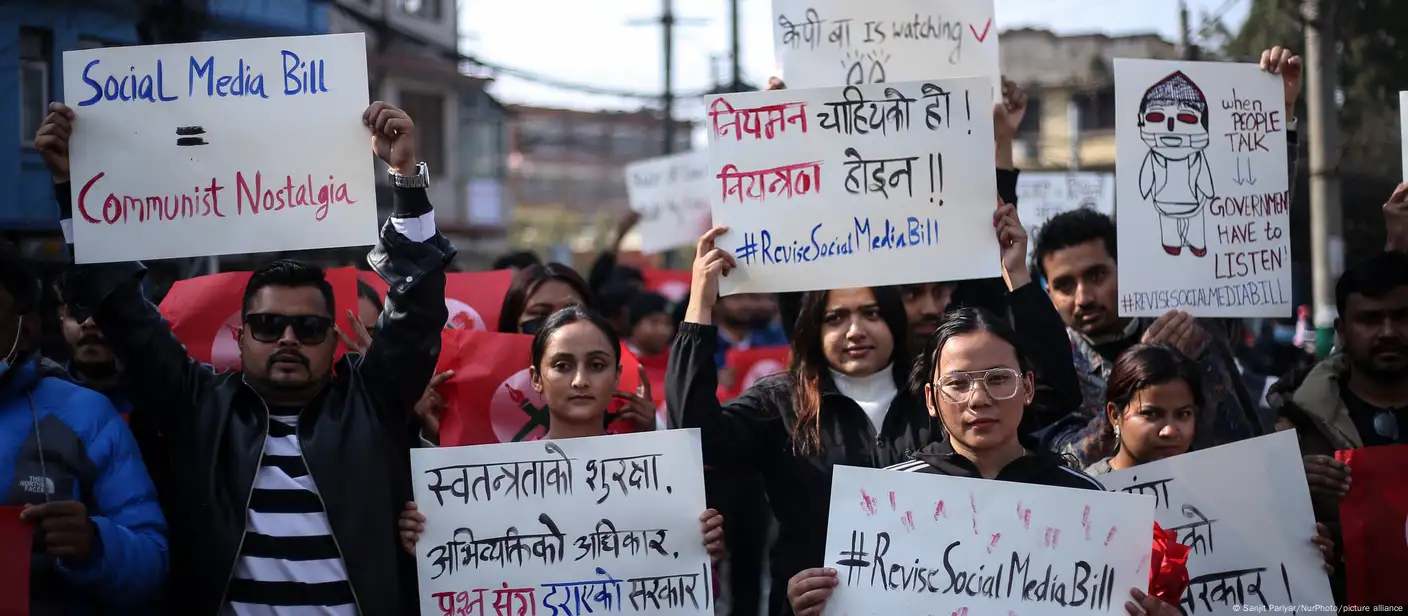
At least 10 people were k!lled on Monday after Nepal police fired rubber bullets, tear gas, and water cannon to disperse protesters in Kathmandu demanding the government lift its ban on social media and tackle corruption
Several social media sites — including Facebook, YouTube, and X — have been inaccessible in Nepal since Friday after the government blocked 26 unregistered platforms, leaving users angry and confused.
“Until now, 10 protesters have d!ed and 87 are injured,” Shekhar Khanal, spokesman for the Kathmandu valley police, told AFP.
“The crowds are still in the streets”.

Many of the injured were being treated at the nearby Civil Hospital, according to its information officer Ranjana Nepal.
“I have never seen such a disturbing situation at the hospital,” she told AFP.
“Tear gas entered the hospital area as well, making it difficult for doctors to work”.
Waving national flags, young demonstrators in the capital Kathmandu started the protest with the national anthem before unleashing chants against the social media prohibitions and corruption.
The crowd swelled as it crossed into a restricted area close to the parliament and pushed through barbed wire.
Violence erupted in the streets as police baton-charged protesters, some of whom climbed over the wall into the parliament premises.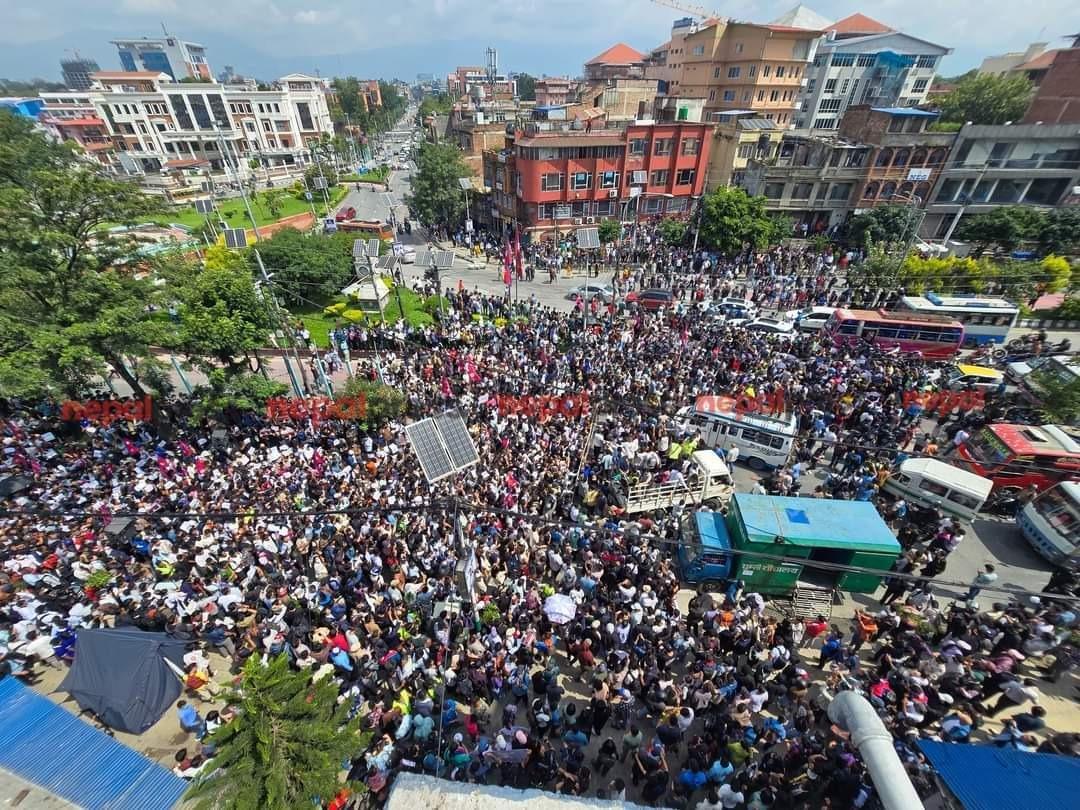
The district administration imposed a curfew in several key areas of the city, including the parliament, the president’s residence, and Singha Durbar, which houses the prime minister’s office.
Similar protests were organised in other districts across the country.
Popular platforms such as Instagram have millions of users in Nepal who rely on them or entertainment, news, and business.
“We were triggered by the social media ban, but that is not the only reason we are gathered here,” said student Yujan Rajbhandari, 24.
Another student, Ikshama Tumrok, 20, said she was protesting against the “authoritarian attitude” of the government.
“We want to see change. Others have endured this, but it has to end with our generation,” she told AFP.
The cabinet decided last month to give the affected companies seven days to register in Nepal, establish a point of contact, and designate a resident grievance handling officer and compliance officer.
The decision came after a Supreme Court order in September last year.
In a statement on Sunday, the government said it respected freedom of thought and expression and was committed to “creating an environment for their protection and unfettered use”.
Nepal has restricted access to popular online platforms in the past.
AFP
Follow Us on Facebook – @LadunLiadi; Instagram – @LadunLiadi; Twitter – @LadunLiadi; Youtube – @LadunLiadiTV for updates


Under developed countries and issues