
The Federal Government has officially scrapped the 2022 Indigenous Language Policy, which mandated that pupils from early childhood through Primary Six be taught in their mother tongue or the language of their immediate environment
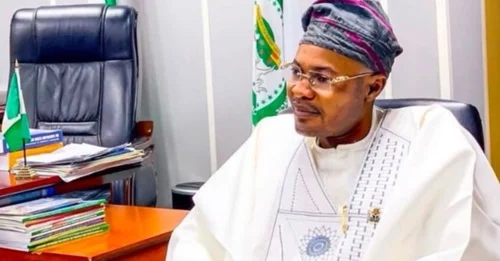
Minister of Education, Dr. Tunji Alausa, announced the reversal on Wednesday in Abuja during the opening of the Language in Education International Conference 2025, organised by the British Council.

Under the new directive, English will now serve as the language of instruction in all Nigerian schools, from primary to tertiary levels. Alausa explained that poor performance in national examinations was largely linked to the previous policy that emphasized mother tongues as the primary medium of instruction.
“Data-driven research by the ministry revealed that the policy had ‘destroyed’ the education system, allowing pupils to advance through classes without acquiring essential literacy skills,” he said. “The National Policy on Language has been cancelled. English is now the language of instruction in our schools, from primary to tertiary levels. Language is one of the most powerful tools in education, and we must ensure it enhances learning across all subjects.”
The minister highlighted the challenges posed by Nigeria’s linguistic diversity, noting that while the policy recommended teaching in mother tongues during early primary education, its implementation varied widely across regions, with some areas not using it at all.
“Overuse of mother tongue from Primary One to Primary Six, and even into JSS classes, has caused total collapse in learning outcomes. Many students reach SS3 and still cannot read or write properly. They eventually fail WAEC, JAMB, and NECO,” Alausa said.
He also pointed out regional disparities, stressing that while English is the language of national examinations, pupils are often taught in local dialects. “In Borno, the mother tongue is Hausa, but many speak Kanuri. In Lagos, some communities like Ajegunle are dominated by southeastern residents, yet most teachers are Yoruba. We need a unified instructional language to bridge these gaps,” he explained.
Donna McGowan, British Council Country Director, said the conference aims to strengthen English language proficiency and provide testing solutions to improve education outcomes. She added that it brings together educators, researchers, and policymakers from Africa, South Asia, and the UK to explore how language can promote inclusion and enhance learning results.
The 2022 Language Policy, now abolished, had sought to promote indigenous languages and cultural heritage, recognising over 600 Nigerian languages, 29 of which are already extinct. However, it faced challenges including a lack of teaching materials, insufficient teacher training, and the complexities of implementing instruction across Nigeria’s diverse linguistic landscape.
Follow Us on Facebook – @LadunLiadi; Instagram – @LadunLiadi; Twitter – @LadunLiadi; Youtube – @LadunLiadiTV for updates



OKAY
Noted