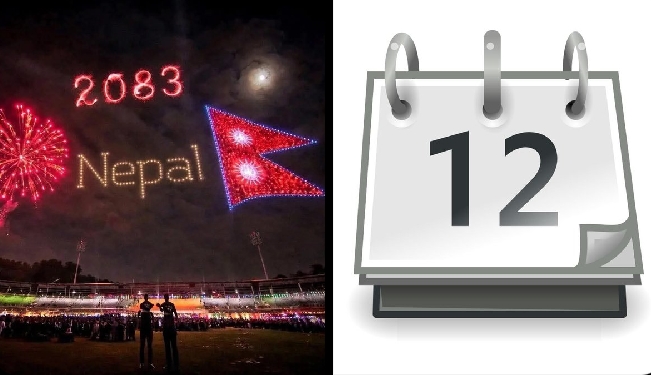
Nepal officially ushered in the year 2083 on Tuesday, placing the nation about 56 years and eight months ahead of the widely used Gregorian calendar
The shift follows the traditional Bikram Sambat system, a lunisolar calendar that remains Nepal’s official framework for civil, legal, and cultural activities. The new year begins on the first day of Baisakh, marked by the sun’s transition into Aries — an event known as Mesh Sankranti.
Across the country, people celebrated with prayers, processions, and community gatherings, reflecting a tradition that has been preserved for generations.
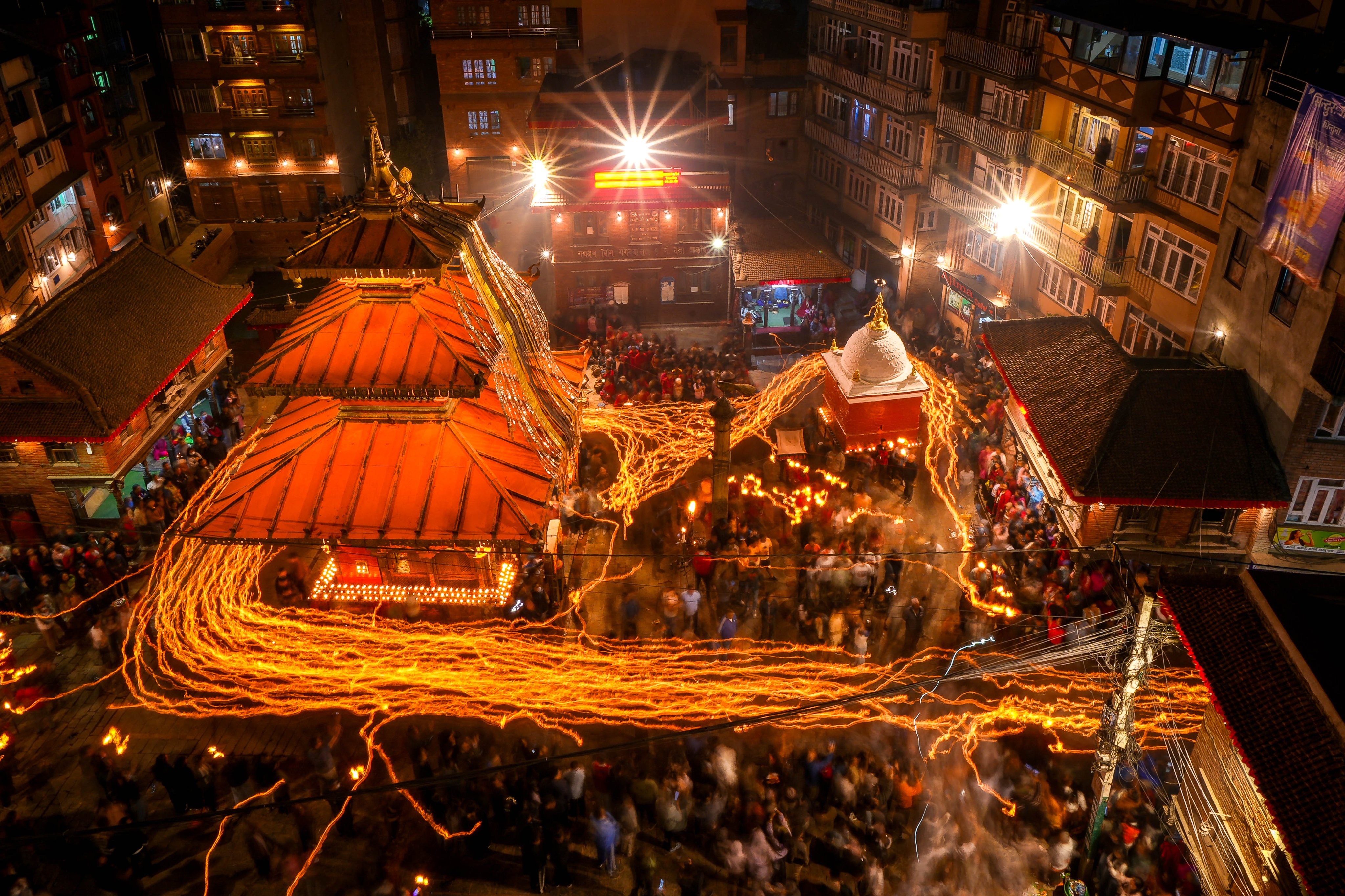
Rooted in ancient Hindu astronomical calculations, the Bikram Sambat calendar is the only one of its kind still used officially by a country today. It plays a central role in daily life, guiding school calendars, public holidays, government documentation, and even personal events where families rely on it to select auspicious dates.
While Gregorian calendar is also used for global interactions, Nepal continues to rely on its indigenous system for domestic affairs, helping maintain cultural continuity.
Celebrations were particularly vibrant in Bhaktapur, where the Bisket Jatra festival drew crowds. The highlight of the event is the ceremonial raising of a massive wooden pole, symbolizing the triumph of good over evil.
Follow Us on Facebook – @LadunLiadi; Instagram – @LadunLiadi; Twitter – @LadunLiadi; Youtube – @LadunLiadiTV for updates




Their complete year should be 6 months
As how 😂