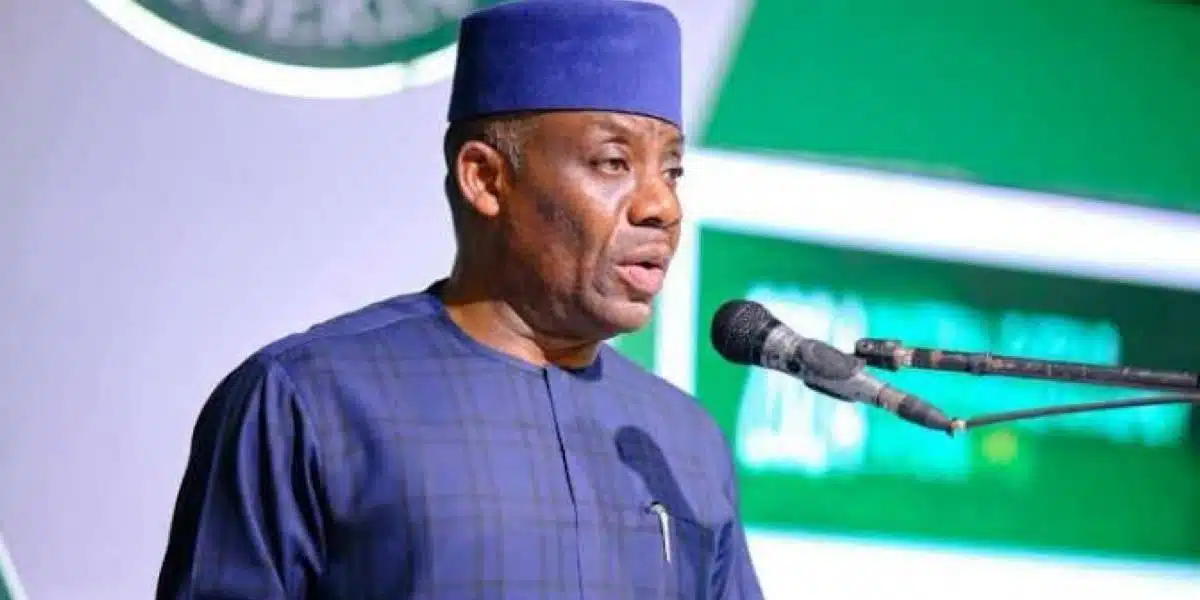
The Federal Government has officially scrapped the Bilateral Education Agreement (BEA) scholarship programme, describing it as an inefficient and unsustainable use of public resources

The move follows months of outcry from stranded Nigerian scholars overseas who accused the government of failing to fulfill its financial obligations under the scheme.
The BEA programme, launched through diplomatic deals with countries including China, Russia, Algeria, Hungary, Morocco, Egypt, and Serbia, had enabled hundreds of Nigerian students to study abroad on government sponsorship.
Despite recent assurances that supplementary allowances had been paid up to December 2024—with more funds requested to cover exchange rate-related shortfalls—Minister of Education Dr. Tunji Alausa declared a definitive end to the programme on Tuesday.
During a courtesy visit by newly elected officials of the National Association of Nigerian Students (NANS), Alausa revealed that the government would reallocate BEA funds to local scholarship initiatives to benefit more Nigerian students.
“In 2024, when I assumed office, I was asked to approve N650 million for 60 students going to Morocco under the BEA programme. I refused. It’s not fair to Nigerian students,” he said.
Alausa criticized the programme’s inefficiencies, citing students being sent to study courses like English, psychology, and sociology in countries where those subjects aren’t taught in languages familiar to Nigerian students.
“I reviewed the courses—some students went to Algeria, a French-speaking country, to study English. That is simply illogical. These are courses we teach better in Nigeria,” he stated.
He also pointed to the absence of performance tracking for students under the scheme, saying, “In 2025 alone, we projected N9 billion to fund just 1,200 students abroad. Meanwhile, millions of students in Nigeria get no support. It’s unjust and unsustainable.”
According to the minister, all 1,200 students currently benefiting from the BEA are enrolled in programmes already available in Nigerian universities.
While current beneficiaries will be allowed to complete their studies, the programme will not admit new students beyond 2025.
“This programme is not the best use of public funds. That money will now be used to fund local scholarships and support more students,” Alausa said.
In response, newly elected NANS President Olushola Oladoja commended the minister for his transparency and the education sector reforms introduced under his leadership.
Follow Us on Facebook – @LadunLiadi; Instagram – @LadunLiadi; Twitter – @LadunLiadi; Youtube – @LadunLiadiTV for updates




OKAY
Noted